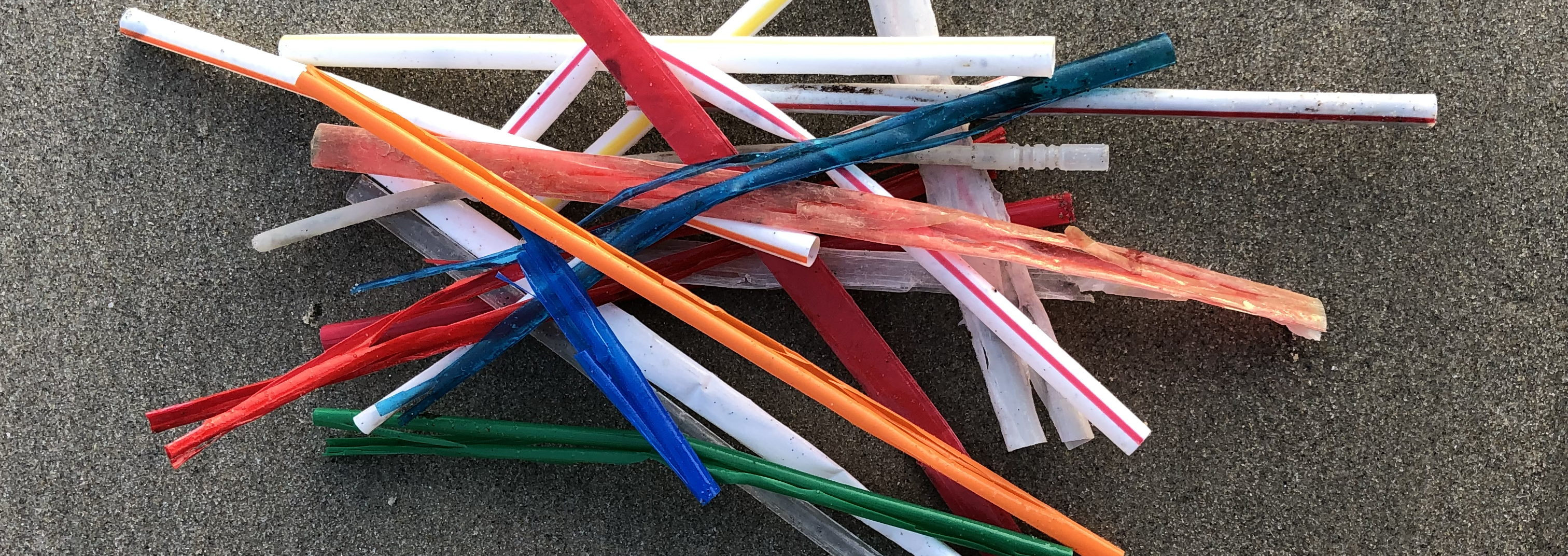
Most of us have experienced it: you open a takeout bag and find plastic utensils, napkins, and condiment cups or packets you didn’t ask for. Or when dining out, your drink arrives at the table with a straw already in it.
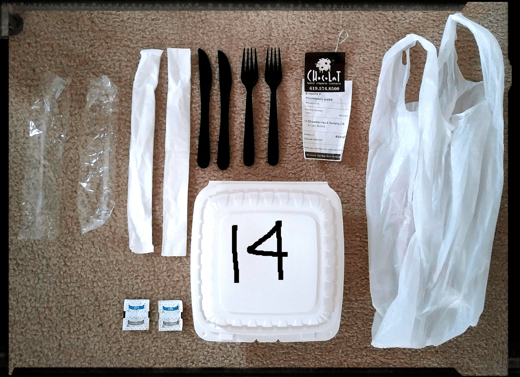
14 pieces of single-use items were included with an order of one crepe.
These single-use items may seem insignificant, but disposable accessory items from takeout meals are a common source of plastic pollution.
To help address this problem, California enacted the Skip the Stuff Law (AB 1276), which went into effect in January 2022. The law is simple. Restaurants and food delivery services provide disposable accessories only when customers request them.
What Does the Skip the Stuff Law Require?
Under AB 1276:
- Retail food facilities and food delivery platforms must provide single-use foodware accessories and condiments only upon request.
- Covered items include utensils, straws, chopsticks, stirrers, and condiment cups and packets—including those made from bioplastics, compostable plastic, bamboo, and paper.
- At drive-throughs and airports, staff may ask customers if they would like them.
- Restaurants using third-party delivery platforms should only include accessories that customers select while ordering in their bags.
- Single-use foodware accessories cannot be bundled together.
A Win for Businesses
By shifting to a “by request” model, businesses can lower supply costs and reduce waste hauling fees, while demonstrating their commitment to sustainability, which is appealing to customers, most of whom want to see a broad reduction in single-use plastics. In fact, according to a survey conducted by Data for Progress, the majority of voters are concerned about plastic pollution and support mitigation measures, including bans on single-use plastics in their communities.
Many restaurants add to their overhead by automatically including utensils, napkins, and condiment packets in takeout orders, and when customers are eating at home, they probably already have these items in their kitchens. As a result, many disposable accessories go straight from the takeout bag to the trash bin or pile up unused in kitchen drawers.
One part of the law that is often overlooked by dine-in restaurants is the practice of placing straws directly into drinks before they are served. Automatically adding a straw to every iced tea, soft drink, and cocktail may seem convenient, but it creates unnecessary waste and adds to purchasing costs.
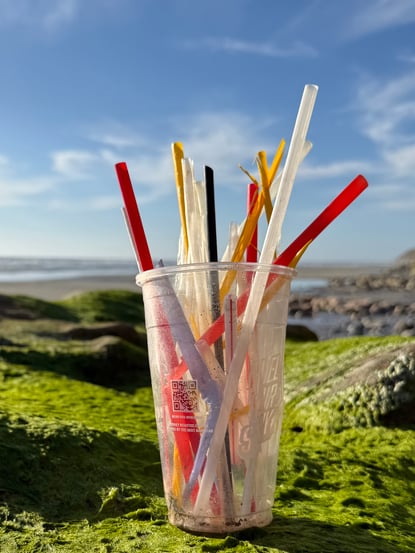
Plastic straws found on the beach in Carlsbad on March 3, 2026.
What Businesses Can Do
Businesses can take several simple steps to comply with the law, reduce waste, and save money:
- Educate staff so they understand and follow the law.
- Do not offer bundled single-use items.
- Update online ordering systems so customers can request only the accessories they need.
- Post signage letting customers know accessories are available upon request. (Download free Surfrider Upon Request Only signs in English and Spanish.)
- Review local ordinances using the San Diego Plastic Law Database to understand additional requirements that may apply.
- Join Surfrider’s Ocean Friendly Restaurants program. (Review the Quick Guide.)
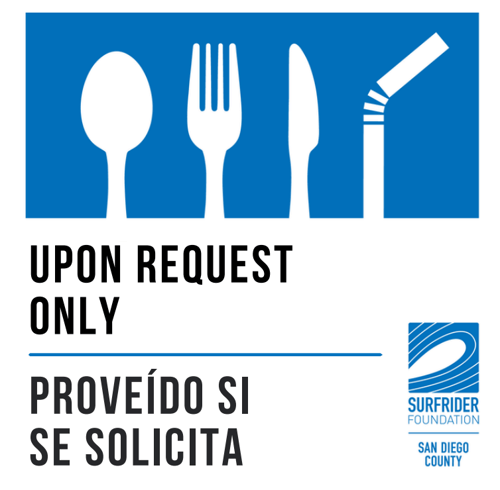
Download a free "Upon Request Only" sign.
What Customers Can Do
Customers also play an important role in making the Skip the Stuff law successful. A few simple actions can help reinforce the shift away from unnecessary single-use plastics:
- Politely decline utensils, straws, or condiment packets you don’t need.
- Saying “no straw please” when ordering helps shift expectations.
- If a straw is automatically placed in your drink, consider mentioning the Skip the Stuff law and asking that straws be provided only upon request in the future.
- Uncheck accessory boxes when ordering online unless you truly need them.
- Carry reusable utensils with you to avoid needing single-use plastic forks, knives, and spoons.
- Report when necessary. In San Diego County, the Department of Health and Environmental Quality (DEHQ) is responsible for enforcement. If a restaurant you frequent consistently ignores Skip the Stuff requirements, contacting DEHQ at (858) 505-6900 can help address the issue.
- Check our San Diego Plastic Law Database to see whether the city where you are dining has adopted its own ordinance. If so, reports can be submitted directly to that city’s code enforcement department. Code enforcement information is included in the database.
- Become a Surfrider Ocean Friendly Restaurants program volunteer.
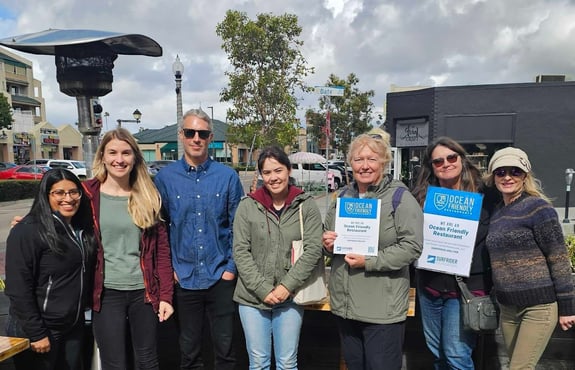
Volunteers canvas businesses in La Mesa regarding the Ocean Friendly Restaurants program.
Why Does It Matter?
Anyone who has participated in a beach cleanup has seen the impact of single-use plastics firsthand. Plastic accessories from takeout meals are regularly found along our coastline.
Because these items are lightweight, they are easily carried by wind and rain into storm drains, creeks, and other waterways. From there, they travel through the watershed and out to the ocean where they break up into microplastics that will persist forever.
By shifting from “include everything” to “only when requested” mindsets, we can reduce unnecessary plastic waste and help protect our ocean, waves, and beaches from plastic pollution.
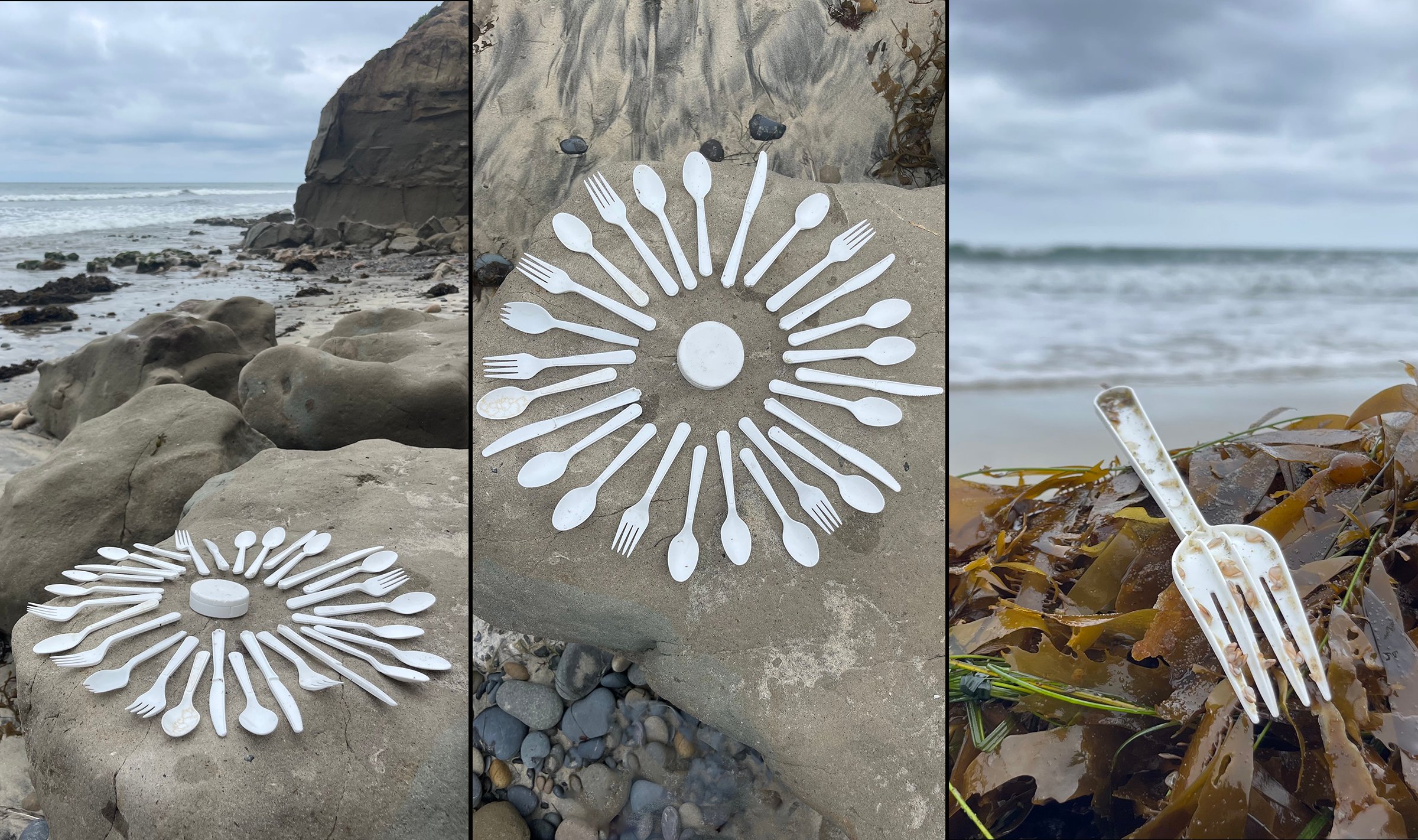
Over 30 pieces of cutlery picked up off the beach in Carlsbad on November 5, 2025. They were different brands, and many of them, like the fork on the right, had baby gooseneck barnacles growing on them.